
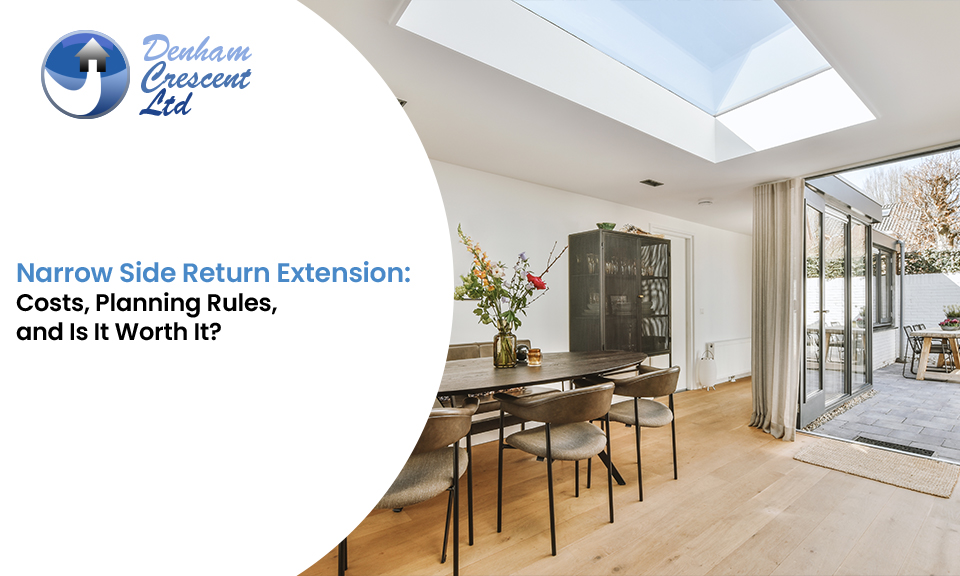
Narrow Side Return Extension: Costs, Planning Rules, and Is It Worth It?
15, Jun, 2026
Did you ever have a thought that the kitchen feels too narrow? The dining table is squeezed into a corner. Family life happens in one part of the house, whilst everyone else ends up spread across different rooms.
Then you look outside and notice a strip of land running along the side of the property. It may only be a metre or two wide, but it feels wasted.
That is where other homeowners like you start looking for a narrow side return extension.
But the question is whether extending into it will make a meaningful difference to how your home works every day? The answer is in the blog.
Why Narrow Side Return Extensions Have Become So Popular
Many older homes were built for a different way of living. Kitchens were smaller, dining rooms were separate, and open-plan family spaces were not part of the design.
Today, most homeowners want the opposite. They want one connected space where cooking, dining, working, and family life can happen together.
A side return extension takes advantage of the unused alley or passageway running alongside the property. Whilst the extra width may seem small on paper, it can completely transform the ground floor layout.
How Much Space Can You Actually Gain?
Gaining even 1.2 to 2 metres of additional width can have a huge impact on how the room feels. A typical side return kitchen extension allows enough space for:
Kitchen island
Larger dining area
Additional storage
Wider walkways
Better furniture layouts
The improvement is often less about square metres and more about usability. Many homeowners find they finally have the kitchen layout they wanted all along.
When Is a Side Return Extension Worth It?
A narrow side extension is often worth considering when:
The kitchen feels cramped
The existing layout lacks flow
There is unused side access
Moving house would cost significantly more
For many families, the decision comes down to value. Rather than paying stamp duty, legal fees, moving costs, and higher property prices elsewhere, extending the existing home often provides a more practical solution.
The best projects focus on solving a specific problem rather than simply adding space.
How Much Does a Narrow Side Return Extension Cost?
The costs vary depending on location, specification, structural work, and finishes. Here’s an example table:
Projects involving extensive glazing, structural steel, bespoke kitchens, or drainage alterations usually sit towards the higher end of the range.
Many homeowners researching the side return extension cost focus only on the build itself. However, professional fees, structural calculations, Building Control costs, and finish selections all influence the final budget.
Do You Need Planning Permission?
Some side return extensions fall under Permitted Development rights, meaning full planning permission may not be required.
However, this depends on factors such as:
Extension size
Overall height
Rear projection
Property location
Conservation area restrictions
Many Victorian properties sit within conservation areas where additional controls apply.
Before finalising any design, it is important to confirm what rules apply to your specific property.
Party Wall Agreements and Legal Considerations
Because side return extensions are often built close to neighbouring properties, Party Wall matters frequently arise. You may need formal agreements if the work affects:
Shared walls
Boundary structures
Foundations near neighbouring properties
Ignoring these requirements early can lead to delays later. A properly managed project addresses legal requirements before construction starts rather than during the build.
How to Keep Natural Light in a Narrow Extension
One concern appears repeatedly when homeowners explore side return extension ideas.
"What happens to the natural light?"
This concern is valid. Extending into the side return often removes windows from the existing side wall. Without careful design, the new space can feel darker than before.
This is why many successful projects include:
Rooflights
Glazed roof sections
Large sliding doors
Internal glazing
Natural light should be considered from the beginning rather than added as an afterthought.
Common Mistakes That Make Kitchens Feel Smaller
Not every extension delivers the result homeowners expect. Here are some common mistakes you need to avoid:
Prioritising floor area over layout
Blocking natural light
Creating awkward furniture arrangements
Underestimating storage needs
Focusing only on appearance
A larger room does not automatically create a better room. The most successful side return projects improve movement, functionality, and everyday living.
Does a Narrow Side Return Extension Add Value?
In many areas, yes. Modern buyers actively look for larger kitchens, open-plan living areas, and flexible family spaces.
A well-designed narrow side return extension often improves both lifestyle and market appeal. Whilst every property is different, extending an underused side passage is often one of the most effective ways to increase usable living space without dramatically altering the footprint of the home.
Is a Side Return Extension Better Than Moving House?
If you already like the area, the schools, the neighbours, and the property itself, moving may solve one problem whilst creating several new ones.
A side return extension allows you to adapt the house to modern living whilst staying in the location you already enjoy. That is why many families choose renovation over relocation.
Read More: dormer loft conversion London
Planning Your Extension Properly
The success of a narrow side return extension depends on much more than construction. Layout planning, natural light, structural design, and long-term usability all influence the final result.
At Denham Crescent, we help homeowners assess whether a side return extension is the right solution for their property. From planning advice and design development to construction and finishing, every stage is focused on improving how the home functions every day.
Sometimes the difference between moving house and staying put is only a metre or two of well-designed space. Book a call for consultation.
Read More: house extension builders london
Share:
