
Before and After Very Small Loft Conversion Ideas That Actually Work
16, May, 2026
A small loft is never a useless loft if you feel the space is too cramped, dark, or too awkward to convert properly. The actual problem is the layout, not the size; it needs some good ideas.
The best before and after very small loft conversion ideas focus on making the space feel practical, open, and comfortable instead of trying to force too much into a limited area.
In many UK homes, especially terraced and older properties, even a compact loft can become a functional bedroom, office, or storage space with the right planning.
Read More: 3 meter house extension Ideas
Can a Very Small Loft Really Be Converted?
A loft does not need to be huge to become usable, but it does need enough headroom and a practical layout. Most loft conversions work best when there is around 2.2m of head height available before construction begins.
Even when space feels tight initially, changes such as dormers, rooflights, and built-in storage can completely change how the loft functions.
At Denham Crescent, we often assess lofts that homeowners assumed were impossible to convert, only to find that better layout planning solved most of the space problems.
What Makes Small Loft Conversions Feel Cramped?
Many small lofts fail because the design tends to add a room instead of improving space. The problems we see include:
Poor staircase positioning
Bulky furniture layouts
Low natural light
Wasted eaves space
Oversized storage solutions
For a very small loft conversion, the goal is not to maximise furniture, but usable space.
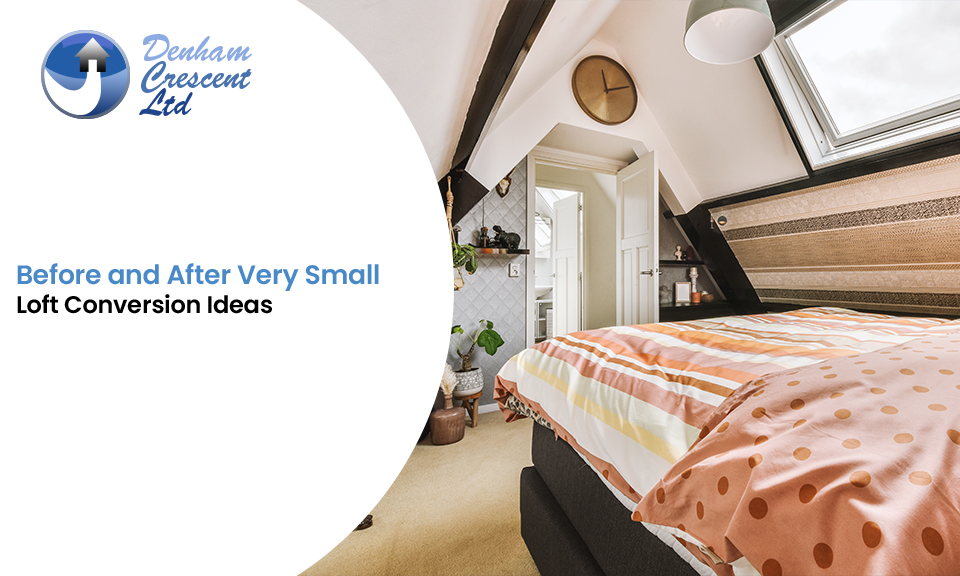
Before and After: Turning an Unused Loft Into a Small Bedroom
Converting a dark storage loft into a compact bedroom is one of the most common transformations. Before conversion, these lofts often feel:
Narrow
Low
Difficult to access
Cluttered with storage boxes
After conversion, the biggest changes usually come from:
Rooflights bring in natural light
Built-in wardrobes within the eaves
Lower-profile furniture
Lighter wall colours
Better floor layout planning
Small loft bedrooms work best when the layout feels simple rather than overcrowded.
Read More: dormer loft conversion
Before and After: Small Loft Home Office Ideas
Remote working has made loft offices far more popular, especially in smaller homes where spare rooms are limited.
A small loft office often works better than a bedroom because it requires less furniture and more open floor area that can have:
Built-in desks beneath sloped ceilings
Rooflights positioned above workspaces
Storage fitted into awkward corners
Slim staircases to reduce floor loss below
Many homeowners searching for very small loft conversion ideas are not looking for large spaces. They simply need one quiet, functional room.
What Are Loft Storage Solutions That Save Space
Traditional wardrobes and cabinets usually waste valuable floor area, especially beneath sloped roofs. This is why built-in storage is an effective upgrade that includes:
Eaves storage with hidden doors
Fitted shelving
Under-bed storage
Built-in drawers within awkward roof spaces
Small loft conversions work best when every part of the room has a clear purpose.
How Dormers Completely Change Small Lofts
Many successful small loft conversion before and after projects involve adding a dormer. The dormer increases usable floor space, standing headroom, and natural light.
Without a dormer, many lofts remain difficult to use because sloped ceilings restrict movement.
How to Make a Small Loft Feel Bigger
Creating the feeling of space matters as much as creating physical space. The most effective ways to open up a loft include:
Using lighter colours throughout
Installing larger rooflights
Avoiding bulky furniture
Keeping layouts simple
Using built-in storage instead of freestanding units
Natural light is important in small lofts because darker spaces tend to feel lower and tighter.
What Is the Minimum Height for a Loft Conversion?
Most loft conversions work best with around 2.2m of height from floor to ridge before structural work begins. Lower lofts may still be possible, but they often require more complex structural changes.
This is why two lofts of similar size can have completely different conversion potential.
How Much Does a Small Loft Conversion Cost?
The cost depends on the type of conversion and how much structural work is required.
Typical UK ranges include:
However, you need to remember that smaller lofts are not always cheaper if the structure is difficult to work with. The cost goes up when dormers are added, structural steel is required, staircase layouts become complex, or bathrooms are included.
When a Small Loft Conversion May Not Be Worth It
Not every loft conversion makes financial or practical sense. There may be cases when the loft has:
Extremely limited headroom
Major structural restrictions
Staircase access problems
Costs that outweigh the value gained
This is why feasibility matters before design ideas are finalised.
Layout Planning Matters More Than Loft Size
Most successful before and after very small loft conversion ideas come down to smart planning rather than large square footage.
At Denham Crescent, we assess how the loft structure, staircase position, storage layout, and natural light will work together before construction begins. This helps homeowners avoid spending money on layouts that still feel cramped after completion.
A small loft can still become one of the most useful spaces in the house when the design focuses on how the room will actually be used day to day.
Share:
