
Is a Timber Frame Extension the Right Choice for Your Home?
19, Jun, 2026
You know you need more space, but every option seems to come with a problem.
A traditional extension looks expensive. Builder timelines keep getting longer. Quotes vary wildly. One contractor recommends brick. Another suggests a timber frame. Then you start reading online and find completely different opinions about cost, durability, insulation, planning permission, and resale value.
This is usually the point where homeowners start asking the same question:
"Would a timber frame extension be the better option?"
Many homeowners researching a timber frame extension are trying to balance cost, speed, energy efficiency, and long-term value before committing to a project. The answer depends on your property, budget, and priorities. For many homeowners, timber frame construction offers faster build times, strong thermal performance, and greater flexibility than traditional building methods.
Why More Homeowners Are Choosing Timber Frame Extensions
Most people do not choose a timber frame extension because they specifically want timber.
They choose it because they want their extension completed faster, with less disruption and better energy efficiency.
Unlike traditional brick-and-block construction, much of the structure is manufactured through off-site construction methods. The frame is produced in a controlled environment before arriving ready for installation. This often reduces time spent on site and helps projects progress more efficiently.
For homeowners living in the property during building work, this shorter programme can make a noticeable difference to daily life.
At Denham Crescent, we often find homeowners initially focus on build speed, then realise one of the biggest advantages is how quickly a timber frame structure becomes weather-tight compared to traditional construction.
What Is a Timber Frame Extension?
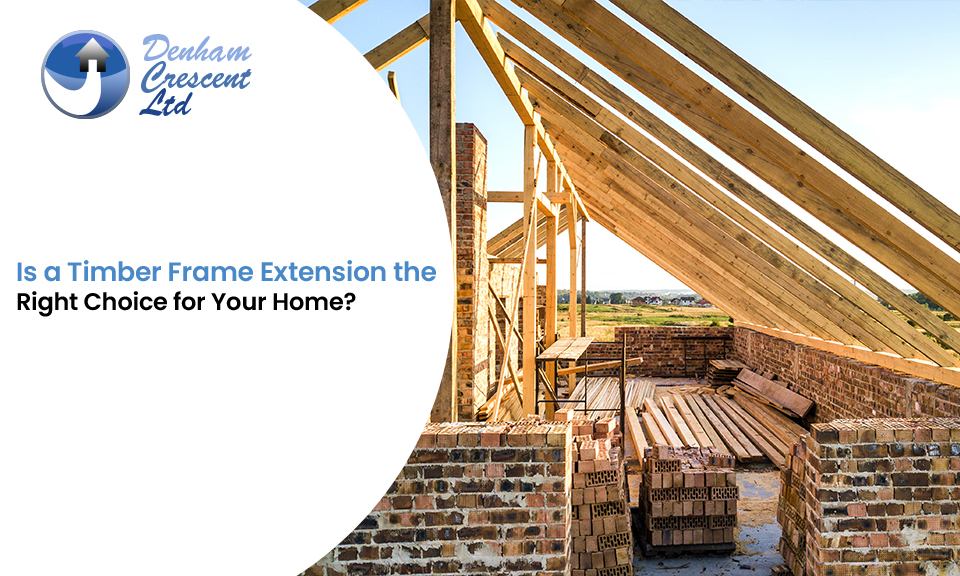
A timber frame extension uses a structural timber framework rather than relying solely on masonry construction.
Once installed, the frame is finished externally using materials that suit the existing property. In many cases, you would not know whether the extension is timber frame or traditional construction simply by looking at it.
This approach is commonly used for rear extensions, side extensions, wrap-around extensions, kitchen extensions, and open-plan family rooms. The finished appearance can still include brickwork, render, cladding, or other external finishes.
When Does a Timber Frame Extension Make Sense?
A timber frame house extension is often chosen when speed matters. Many homeowners need additional space but do not want months of disruption whilst construction takes place. Because much of the structure is manufactured before arriving on site, installation is often quicker than traditional building methods.
It is also a popular option for homeowners focused on energy efficiency. Modern timber frame systems are designed to achieve strong thermal performance, helping create comfortable living spaces whilst reducing heat loss.
A timber frame rear extension is one of the most common applications because it allows larger open-plan living areas to be created efficiently. Similarly, a timber frame kitchen extension is often chosen when families want to improve layout, increase natural light, and create more usable space.
Who Should Consider a Timber Frame Extension?
Timber frame construction is particularly well suited to homeowners who need more living space but want to keep construction time under control. It is commonly used for kitchen extensions, rear extensions, and open-plan family areas where the goal is to improve how the property functions rather than simply increase floor area.
Many growing families choose timber frame because it allows projects to move forward more efficiently whilst still delivering the same finished appearance as a traditional extension.
Timber Frame Extension vs Brick Extension
This is one of the biggest decisions homeowners face.
Both methods can produce excellent results, but they achieve them differently.
The biggest misconception is that a timber frame is somehow inferior. Modern structural timber systems are designed to meet the same Building Regulations standards as traditional construction.
For most homeowners, the decision comes down to project priorities rather than structural capability.
How Much Does a Timber Frame Extension Cost?
The cost of a timber frame extension UK project depends on specification, size, glazing, finishes, and location.
Many homeowners compare timber frame extension cost per m2 when evaluating different construction methods. Whilst the frame itself may offer efficiencies, the final cost is often influenced more by glazing, kitchens, bathrooms, structural steel, and finish quality.
The overall cost of a timber frame extension often depends more on design choices and structural requirements than on the frame itself.
Can Any House Have a Timber Frame Extension?
Timber frame systems are commonly used on Victorian terraces, Edwardian homes, semi-detached houses, detached family homes, and contemporary properties. The construction method is highly adaptable and works across a wide range of property types.
However, certain projects may require additional consideration. Properties within conservation areas, listed buildings, or homes with specific planning conditions may have restrictions relating to external appearance and materials. The structure itself is rarely the issue. The final design is usually what planning authorities assess.
Do You Need Planning Permission?
Many homeowners assume a timber frame extension requires different planning approval than a brick extension. In reality, planning authorities are usually concerned with the size, appearance, location, and impact of the extension rather than the hidden structural system behind the walls.
Some projects fall under Permitted Development rights, whilst others require full planning permission. The process is generally the same whether the extension is built using timber frame or traditional masonry construction.
Building Regulations for Timber Frame Extensions
Every timber frame extension must comply with Building Regulations.
This includes structural stability, fire safety, insulation, ventilation, moisture control, and drainage requirements. Building Control officers assess the project against the same standards applied to traditional extensions.
A properly designed timber frame extension regulations package addresses these requirements before construction begins, helping avoid costly changes later in the project.
Will a Timber Frame Extension Affect Mortgage or Insurance?
This is a concern many homeowners have, particularly if they have only ever lived in traditionally built properties.
In most cases, properly designed and approved timber frame extensions do not create issues with mortgage lenders or insurers. The important factor is compliance with Building Regulations and recognised construction standards.
Lenders and insurers focus on the quality and safety of the completed structure rather than assumptions about timber itself.
Are Timber Frame Extensions Warm, Strong and Durable?
This is where many homeowners still have concerns.
The reality is that modern timber frame construction performs extremely well. Many systems are chosen because achieving strong insulation performance is easier. Better insulation often means reduced heat loss, improved comfort, and lower energy consumption.
Timber frame extensions are also designed to provide long-term structural performance when installed correctly. For most homeowners, the finished extension feels no different from a traditional extension in everyday use.
Common Mistakes Homeowners Make
Many extension problems begin before construction starts.
Homeowners often compare quotations without understanding what is included, focus only on upfront costs, or underestimate the importance of layout planning. Others spend considerable time comparing construction methods whilst overlooking factors such as natural light, room flow, and long-term usability.
The construction method matters, but the design and planning process often have a greater impact on the finished result.
Read More: house renovation contractor
Is a Timber Frame Extension Worth It?
For many homeowners, yes.
A timber frame extension cost may be similar to traditional construction, but the benefits often come through reduced build times, strong thermal performance, and lower site disruption.
The right timber frame extension should solve a space problem rather than simply add square metres. When planned properly, it can improve how the home works every day whilst delivering long-term value.
Planning a Timber Frame Extension Properly
Layout planning, structural design, planning requirements, energy performance, and future usability all need to work together.
Denham Crescent helps homeowners compare timber frame and traditional construction before any design work begins. Understanding which system suits the property, budget, and long-term plans often prevents expensive mistakes later and helps projects move forward with greater confidence.
From planning advice and design development to construction and finishing, every decision is focused on creating practical living space that adds lasting value and supports the way families live today.
Read More: flat roof extension ideas
Share:
